

Jul 17, 2026
ACL Tear or Meniscus Tear? Why the Real Answer Is Often Both
You tore your ACL. There’s a good chance that isn’t the only structure damaged — and whether anyone tells you that early changes everything about your treatment plan.
The question patients ask is the wrong question
Almost every patient who come to us after a twisting knee injury asks the same thing: “Is it my ACL, or is it my meniscus?” It’s a reasonable question. But it assumes these are two separate, competing possibilities — pick one. Clinically, that assumption is often wrong.
The forces that tear an ACL — a sudden pivot, a hard deceleration, an awkward landing with the foot planted — routinely damage the meniscus at the same time. The two structures sit beside each other in the joint and absorb the same rotational force. In a meaningful proportion of complete ACL tears, there is meniscal damage too, whether or not it’s causing symptoms yet.
This is the conversation we think every ACL patient should have before they finish their first consultation — not “which one do I have,” but “how do these interact, and what does that mean for my knee.”
QUICK ANSWER
ACL and meniscus tears frequently occur together because the same mechanism of injury — twisting or pivoting with the foot planted — loads both structures simultaneously. This matters clinically because a concurrent meniscus tear can change whether surgery is recommended, how quickly you can load the knee, and what your rehabilitation sequencing looks like.
Why these two structures get injured together
The ACL provides the knee’s primary resistance to the tibia sliding forward and rotating under the femur. The meniscus — two C-shaped cartilage pads sitting between the bones — absorbs and distributes load, and also acts as a secondary stabiliser against that same rotational movement.
When the ACL is intact, it does most of the work resisting rotation. When it tears, that job partially shifts to the meniscus — which is one reason a knee that “copes” without ACL reconstruction can go on to develop meniscal damage months or years later if it isn’t properly rehabilitated or protected. And in the moment of injury itself, the same twisting force that ruptures the ACL frequently tears the meniscus directly, particularly the posterior horn of the medial meniscus in non-contact pivoting injuries.
WHY THIS MATTERS MORE THAN MOST PATIENTS REALISE
A meniscus tear discovered alongside an ACL tear is not an unlucky complication to mention in passing. It is frequently the single factor that changes the entire treatment recommendation — sometimes pushing a patient who might have been suitable for non-surgical ACL rehabilitation toward earlier surgery, because a repairable meniscus tear heals far better when it isn’t left to keep moving under an unstable joint.
Telling them apart — useful, but not the point
Differentiating the two is still clinically useful, particularly in the first hours after injury, so here is the pattern we look for. But treat this as context, not a self-diagnosis tool — imaging and a hands-on assessment are what actually confirm it.
ACL-dominant presentation
- Audible or felt pop at the moment of injury
- Rapid swelling within 2–6 hours (bleeding in the joint)
- Instability — the knee feels like it will give way
- Diffuse ache rather than a single tender spot
Meniscus-dominant presentation
- Pain localised to the inner or outer joint line
- Swelling builds more gradually, over 24–48 hours
- Catching, clicking, or locking through range of motion
- Worse with squatting, twisting, or descending stairs
In practice, a patient with a combined injury often shows a blend of both — instability and locking, rapid swelling and joint-line tenderness. That overlap is itself a clue that both structures may be involved, and it’s exactly why an MRI plus a thorough clinical examination — not a symptom checklist — is the only reliable way to know what you’re dealing with.
How a concurrent meniscus tear changes the surgical decision
At Movementology, this is one of five factors we weigh in the surgical-versus-rehabilitation conversation for every ACL patient. A meniscus tear doesn’t just add a second diagnosis — it actively shifts the recommendation, depending on where the tear is and whether it can be repaired.
- Repairable tears (typically peripheral, in the vascular “red zone”): these heal well when surgically repaired early, and a repaired meniscus alongside ACL reconstruction is often a strong reason to operate sooner rather than trial rehabilitation first — leaving a repairable tear to keep moving under an unstable knee reduces its chances of healing.
- Irreparable tears (typically central, in the avascular “white zone”): these are usually trimmed (partial meniscectomy) rather than repaired, which changes the long-term joint-health conversation — less meniscus tissue means more direct load on the cartilage over time, making structured quadriceps rehabilitation even more important for protecting the joint long-term.
- Stable, small tears with an intact ACL: these can sometimes be managed with rehabilitation alone, provided the knee remains stable under progressive loading — the same “trial of rehabilitation as diagnostic tool” principle we use for ACL-alone injuries applies here too.
How it changes your rehabilitation — this is where most programmes fall short
A generic ACL protocol applied to a knee with a repaired meniscus is a common cause of setbacks we see in patients who come to us after rehabilitation elsewhere hasn’t gone to plan. The two injuries don’t just coexist — they impose different, sometimes conflicting, load restrictions that a criteria-based programme has to reconcile.
How Arthrorehab sequences a combined ACL–meniscus repair
- Weight-bearing and flexion range are governed by the meniscus repair, not the ACL graft — often more conservative in the first 4–6 weeks than an isolated ACL protocol would call for.
- Deep flexion loading (beyond roughly 90°) is deferred until the meniscus repair has demonstrated healing, confirmed clinically, not assumed by time.
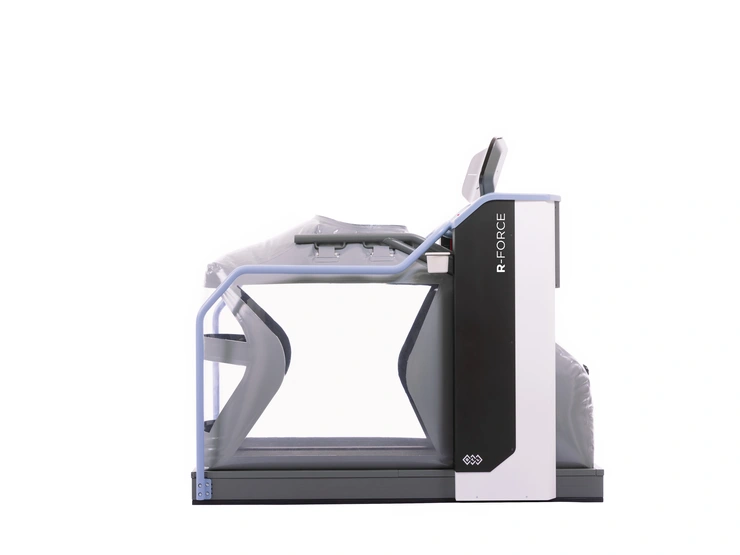
- The BTL Zero Gravity Treadmill lets us continue full gait-cycle training with body weight offloaded, so neuromuscular patterning and cardiovascular conditioning don’t stall during the meniscus-protective phase.
- Quadriceps strengthening still begins early, but through ranges and loading angles that respect the repair’s healing window.
- Return-to-sport clearance criteria (LSI ≥90%, hop battery ≥90%) apply exactly as they would for an isolated ACL case — the meniscus doesn’t lower the bar, it changes the path to reach it.
This is precisely why we don’t hand patients a generic printed sheet at Movementology. Two patients with an “ACL reconstruction” on paper can need meaningfully different programmes depending on what happened to the meniscus at the same time.
- 900+ Patients who avoided surgery through structured rehab
- 72,000+ Treatment sessions delivered
- 24 yrs Dr. Padmanaban’s clinical experience
A real recovery — meniscus repair alongside a return to competitive sport
MENISCUS REPAIR · NATIONAL BADMINTON ATHLETE
“I’m a national-level badminton player. Six months post meniscus surgery — I am jogging and getting back on court. I wouldn’t have believed it was possible.”
Riya’s meniscus repair required exactly this kind of sequencing — protected loading in the early phase, progressive return to court movement only once the repair had demonstrated it could tolerate it, and the same objective clearance criteria we hold every athlete to before full return.
What to do if your knee gave way, locked, or swelled
Whichever structure turns out to be involved, the first step is the same: a proper clinical assessment, not rest and a wait-and-see approach. At Movementology, that assessment specifically screens for concurrent ACL and meniscus involvement — because treating one while missing the other is one of the most common ways an ACL rehabilitation programme quietly underperforms.
If your knee gave way, locked, clicked, or swelled after a twist or pivot, a Movementology assessment will tell you exactly what’s involved — ACL, meniscus, or both — and build a criteria-based recovery plan around the combination, not a generic template.
Book your knee assessment at Movementology
Frequently asked questions
- How common is it to tear the ACL and meniscus at the same time?
Concurrent meniscus damage is common in ACL tears — frequent enough that we screen for it in every ACL assessment rather than treating it as an unusual finding. The same twisting or pivoting mechanism that ruptures the ACL routinely damages the meniscus in the same moment, particularly the posterior horn of the medial meniscus.
- If I have both an ACL tear and a meniscus tear, do I definitely need surgery?
Not automatically — but the meniscus finding changes the conversation. A repairable meniscus tear is often a stronger reason to operate earlier, because leaving it to move under an unstable knee reduces its chance of healing. An irreparable or very stable tear may still leave room for a structured rehabilitation trial. This is a case-by-case clinical decision, not a rule.
- Does a meniscus repair slow down ACL rehabilitation?
It changes the sequencing rather than simply slowing everything down. Weight-bearing and deep flexion are typically more restricted in the first four to six weeks to protect the repair, and the BTL Zero Gravity Treadmill lets us keep gait training and conditioning going during that window. The final return-to-sport criteria — strength symmetry, hop testing — remain the same as for an isolated ACL case.
- Can a meniscus tear heal without surgery?
Some can. Smaller tears in the outer, blood-supplied edge of the meniscus have real healing potential, especially when the knee is otherwise stable and load is carefully progressed. Tears in the inner, avascular zone typically don’t heal on their own and are more often trimmed than repaired if surgery is needed. Which category yours falls into is determined by imaging and clinical assessment, not by how it feels.
- How can I tell if it’s my ACL, my meniscus, or both?
Rapid swelling and a feeling of instability point toward the ACL; joint-line pain and catching or locking point toward the meniscus — but a combined injury often shows both patterns at once, which is itself a clue. Self-assessment isn’t reliable enough to act on. An MRI alongside a hands-on clinical examination is the only way to know for certain what’s involved.
Chief Physiotherapist, Lead Consultant – Advanced Orthopedic Rehabilitation